

Buying a replacement part for a German vehicle is not only about finding the right price. A counterfeit component can look convincing in a box yet fail much earlier than a genuine part. In the UAE, heat, dust and heavy daily use can make poor-quality components a bigger concern. When buying German car spare parts in UAE, take a few minutes to inspect the part yourself before approving the purchase.
With more than 20 years of experience in automotive spare parts, we have learned that small physical details can reveal problems. Here is what you should look for before fitting a replacement to your vehicle.
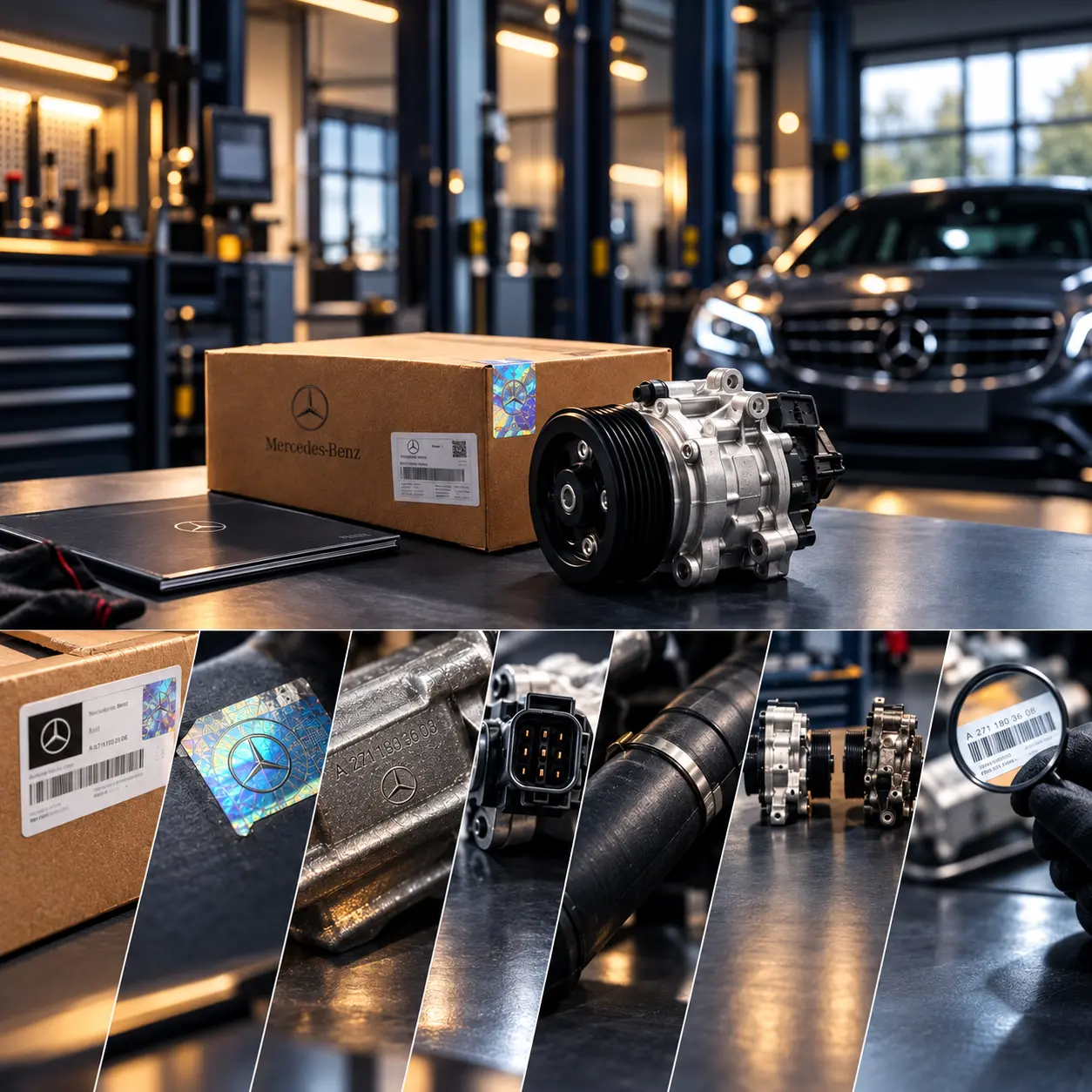
Before opening the package, examine the original packaging. Genuine products generally have consistent printing, clear product labels and accurate manufacturer markings. Look at the logo, spelling, barcode, product code and overall printing quality.
Before buying, check these:
● Printing quality: Look for sharp text, clear logos and consistent branding. Blurry printing can be a warning sign.
● Product labels: Check the part number, barcode, manufacturer details and other product information.
● Security features: Look for the manufacturer's known security sticker, holographic label or other authenticity feature. Not every genuine part uses a hologram.
● Seals and packaging: Watch for broken seals, re-taped boxes or signs that the package has been opened.
● Spelling and markings: Incorrect spelling, poor-quality printing or mismatched branding can indicate counterfeit packaging.
Do not assume that every genuine German car part must carry a hologram. Manufacturers use different authenticity features. If the manufacturer provides an authenticity check, use that information rather than judging the part by a hologram alone.
Once the box is open, look closely at the component. Genuine German auto parts from established manufacturers normally show attention to mould quality, surface finish and component markings. Rough edges, uneven casting lines, excessive flashing or unclear engraved markings deserve attention.
Weight can also raise a question with metal components. A part that feels noticeably lighter than the original may use different material or construction. However, weight alone does not prove that a part is counterfeit. Different production versions can have different specifications, so combine this observation with other checks.
When checking BMW spare parts in the UAE, compare mounting points, connectors, dimensions and visible manufacturer markings with the old component. A similar-looking replacement is not necessarily the correct one.
Rubber components need extra attention in the UAE climate. Bushings, mounts, seals and coolant hoses should feel firm while retaining suitable flexibility. New rubber should not have obvious cracks, hardening or a chalky surface.
Plastic housings deserve a close look too. Poor mould quality can leave rough seams or uneven edges. On electrical components, inspect the pins inside the connector. They should be straight, clean and free from obvious corrosion or discoloration.
A genuine part can still be wrong for your vehicle. This is why the part number matters.
Find the OEM part number or manufacturer part number on the component or packaging. Compare it with a reliable catalogue, supplier record or VIN-based parts lookup. VIN verification can help confirm vehicle compatibility when the same model has different engines, production years or equipment specifications.
Do not rely only on colour, shape or a seller's assurance. An incorrect part number can lead to poor fit, installation problems and extra expense.
For Mercedes-Benz spare parts in Sharjah, UAE, verify the product code, reference number and vehicle details before fitting the component.
If you still have the removed component, keep it with you when buying the replacement. Place both parts side by side and compare both, rather than relying only on photographs or appearance.
Compare the following details:
● Mounting holes and brackets: Make sure their position and shape match.
● Pipe or hose connections: Compare the size, direction and location of the inlets or outlets.
● Electrical connectors: Count the pins and compare the connector shape.
● Overall dimensions: Check the length, width and other important physical measurements.
● Manufacturer markings: Look for matching engraved, stamped or embossed markings where applicable.
● Part number: Confirm that the number matches the required specification for your vehicle.
Even small differences can affect installation. This comparison is especially useful when the replacement looks almost identical to the original but has a different specification.
The seller is another part of your authenticity check. A reliable parts supplier should be able to provide the manufacturer's name, exact part number and compatibility information. Where relevant, ask how the component is sourced and whether its details can be verified through the manufacturer's catalogue or product system.
Be cautious, because unusually low pricing comes with vague product information, missing labels or pressure to buy quickly. A lower price does not automatically mean a part is fake, but unexplained pricing combined with other warning signs deserves closer attention.
Spotting counterfeit car parts requires more than looking for a single hologram or logo. Examine the packaging, study the physical finish, inspect rubber and connectors, verify the part number and compare the replacement with the original whenever possible. These checks can help you avoid fake spare parts while also reducing the risk of buying a component that simply does not match your vehicle.
If you need help verifying a German vehicle component, you can speak with our team at Al Nabaa Auto Spare Parts Sharjah, UAE and share your vehicle and part details before making a purchase.
You can also email us, We will reply as soon as possible.